
Your Online Reputation and How to Improve It


Hey,
We're going to explore the critical world of Online Reputation Management (ORM) and its impact on your business success.
ORM is the art and science of shaping public perception of a brand or individual on the internet.
It's like being your own PR agent in the digital world, but with a much wider reach and 24/7 responsibility.
When United Airlines faced a PR crisis after a passenger was forcibly removed from a flight, their lack of effective ORM led to a stock drop of $1.4 billion in just days.
When Airbnb faced backlash over discrimination issues, they responded with a comprehensive anti-discrimination policy and a #WeAccept campaign, effectively turning a potential crisis into a brand-strengthening moment.
The ORM Landscape: Key Findings
This groundbreaking study analyzed over 1,100 research papers with nearly 50,000 citations to give us a comprehensive view of the ORM field. Here's what they discovered:
ORM keeps evolving
Its relevance across industries is increasing
Beyond marketing, ORM affects sales, customer service, and even HR
Different platforms and industries require tailored ORM strategies
Every online interaction is an opportunity
to strengthen your reputation.
Make each one count!
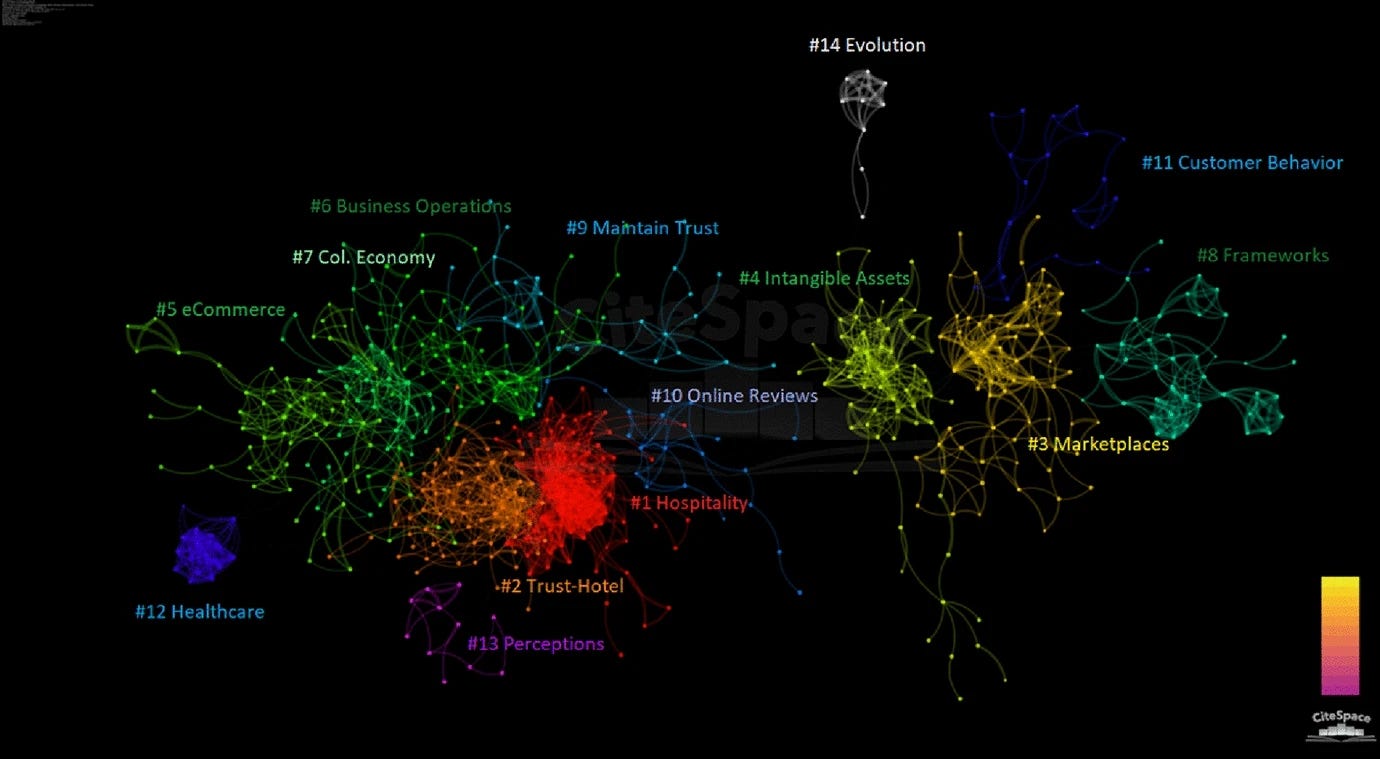
Pillars of ORM
Researchers identified 14 main areas of ORM study.
Hospitality - Managing hotel and restaurant reputations on platforms like TripAdvisor and Yelp
E.g. The Ritz-Carlton's "Radar On-Antenna Up" policy, where staff actively seek to resolve guest issues before they become complaints
Building and maintaining trust in the hotel industry specifically
E.g. Marriott's implementation of cleanliness protocols during the COVID-19 pandemic
Managing reputation in online marketplaces like Amazon or eBay
E.g. eBay's detailed seller ratings system
Treating online reputation as a valuable intangible asset
E.g.: Apple's brand value, largely built through reputation, exceeded $200 billion in 2020
E-commerce - Building trust in online stores
E.g. Zappos' 365-day return policy and free shipping both ways
Integrating ORM into day-to-day business operations
E.g. Dell's creation of IdeaStorm, a platform for customers to suggest product improvements
Collaborative Economy - Managing reputation in peer-to-peer platforms
E.g. Airbnb's host and guest review system
Trust Frameworks - Developing models to explain online trust formation
E.g. The Technology Acceptance Model (TAM) used to predict user acceptance of new technologies
Strategies for building and maintaining customer trust
E.g. Patagonia's transparency about its supply chain and environmental impact
Understanding the impact of online reviews on consumer behavior
Yelp's influence on restaurant revenue (a one-star increase can lead to a 5-9% revenue increase)
Customer Behavior - Analyzing how online information affects customer decisions
E.g. The rise of "webrooming" - researching products online before buying in-store
Healthcare - Managing online reputations of healthcare providers and institutions
E.g. Cleveland Clinic's active social media presence and health education content
Understanding how online activities influence public perception of a brand
E.g. Nike's Colin Kaepernick campaign, which polarized public opinion but ultimately boosted sales
Trust Evolution - Studying how online trust develops and changes over time
E.g. The evolution of trust in online banking from its inception to widespread adoption
While some clusters may be more relevant to your industry than others, insights from each can provide valuable perspectives for managing your digital presence.
Tips for your business:
Empower your staff to resolve issues on the spot to prevent negative reviews
Showcase behind-the-scenes efforts to maintain quality and safety
Prioritize quick shipping and excellent customer service to maintain high ratings
Include reputation management in your financial planning and reporting
Offer generous return policies to reduce perceived risk for online shoppers
Create feedback loops to incorporate online reputation insights into product development
Implement a two-way rating system if your business involves peer-to-peer transactions
Use established trust frameworks to guide your website design and user experience
Regularly communicate your company's values and actions to reinforce trust
Actively encourage satisfied customers to leave reviews
Ensure consistency between your online presence and in-store experience
Share patient success stories (with permission) to humanize your healthcare brand
Monitor social media sentiment around your brand to gauge public perception
Regularly reassess your trust-building strategies as your customers and technology evolve
Intellectual Turning Points: Game-Changers in ORM
Four key papers revolutionized our understanding of ORM. Here are the key findings:
Sparks & Browning (2011): Revealed the outsized impact of online reviews on hotel bookings. Negative reviews have a greater impact than positive ones
Ayeh et al. (2013): Explored how user-generated content affects travel planning. Perceived trustworthiness of the source is crucial
Kim et al. (2008): Examined the role of trust in e-commerce decisions: Perceived risk significantly influences online purchase intentions
Beldad et al. (2010): Investigated how social media influences online reputation. Consistency across platforms is key to building trust
Tips for your business:
Prioritize addressing negative feedback quickly and professionally
Encourage reviews from verified customers to boost credibility
Be transparent about security measures and privacy policies
Develop a cohesive brand voice across all your online channels
Burst Patterns: Trending Topics in ORM
The study identified "hot topics" in ORM over time:
Early 2010s: Focus on understanding basic ORM principles. Companies started realizing the importance of monitoring online mentions
Mid 2010s: Surge in research on ORM in the hospitality industry. Development of specialized ORM tools and services
Late 2010s: Growing interest in ORM for the collaborative economy (e.g., Airbnb, Uber)
Current: Emphasis on integrating ORM with overall business strategy. ORM becoming a C-suite concern
Tips for your business:
Stay ahead by focusing on emerging trends. For instance, consider how you can apply collaborative economy ORM principles to your business, even if you're not in that sector.
If you're just starting, begin by setting up Google Alerts for your brand name
Look for ORM case studies in your specific industry for insights
Consider creating a cross-functional ORM team including marketing, customer service, and PR
Practical Applications Across Industries
Let's look at how different industries are applying ORM:
Retail: Managing product reviews and customer feedback
E.g. Best Buy's public response strategy to negative reviews
Finance: Building trust and credibility
E.g. Chase Bank's social media customer service
Technology: Managing rapid information spread
E.g. Apple's controlled information release strategy
Food and Beverage: Handling health and safety concerns
E.g. Chipotle's transparency during E. coli outbreaks
Tips for your business:
Use negative feedback as product development input
Provide financial education content to position your brand as an expert
Develop a rapid response plan for potential product issues or leaks
Have a crisis communication plan ready before you need it
The Future of ORM: Emerging Trends
Using AI to analyze and respond to online sentiment in real-time
E.g. IBM's Watson helping companies understand customer feedback
Optimizing online presence for voice search results
E.g. Domino's Pizza optimizing for voice ordering
Increasing importance of video in shaping online reputation
E.g. Blendtec's "Will It Blend?" YouTube series
Using blockchain to verify reviews and credentials
E.g. Revain's blockchain-based review platform
Tips for your business:
Start exploring AI-powered ORM tools
Ensure your online content answers common questions about your business
Consider starting a YouTube channel to showcase your product or expertise
Stay informed about blockchain developments in your industry
Key Takeaways
Be Proactive: Don't wait for a crisis to start managing your online reputation
Be Consistent: Ensure your brand message is uniform across all platforms
Be Responsive: Address both positive and negative feedback promptly
Be Authentic: Genuine engagement resonates more than corporate-speak
Be Adaptive: Stay updated on ORM trends and be ready to pivot your strategy
Your reputation is your most valuable asset and your biggest vulnerability.
With a robust ORM strategy, you're positioning your brand for growth.
In the premium section below, I present some of the ideas that I got while preparing this post. I hope you find those tips insightful.
Advanced Action Steps
Now that we've explored the landscape of Online Reputation Management, let's roll up our sleeves and get practical. Here's your action plan to take control of your digital reputation:
Keep reading with a 7-day free trial
Subscribe to Grow Your Business to keep reading this post and get 7 days of free access to the full post archives.